What this is about
Cargo is nothing abstract in this game: it sits in boxes you can touch, move and lose. This guide shows the run of a hauling contract from acceptance to delivery and explains the terms that keep coming up.
Cargo and hauling
- Cargo – goods in containers. Every container has a fixed size in SCU.q1
- Hauling – a contract where you bring goods from one place to another. The contracts in the “cargo” category in the Chronist all come from Covalex.q3
- Delivery – the little brother: usually one package in your personal inventory instead of containers on the grid.q3
- Freight elevator – the lift between warehouse and hangar. This is where you collect goods and hand them back.q2
- Cargo grid – the area in or on the ship where containers may sit.q1
- SCU – the size unit of the containers. The cargo system knows sizes from one eighth up to 32 SCU.q1
The run
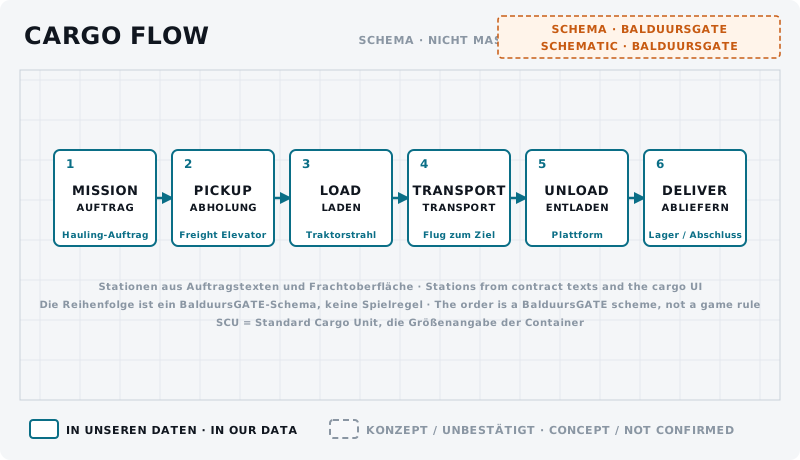
Six steps, always the same:
- Contract – accept and read it: goods, amount, pickup, destination.
- Pickup – request the goods at the freight elevator.
- Load – get containers onto the cargo grid, usually with the tractor beam.
- Transport – fly there without losing the load.
- Unload – at the destination, containers from the grid onto the platform.
- Deliver – send them to the warehouse, complete the contract.
The six steps are our ordering, not a game rule. The individual stations appear like this in the contract texts and in the game’s cargo interface.q2q3
What can go wrong
- The amount does not fit on the cargo grid – the rest stays behind.
- The destination warehouse is full; the interface then states explicitly that delivery is not possible.q2
- The cargo is volatile: if your ship takes damage it becomes unstable and may explode.q2
- You leave goods in the loading area: the game warns that they will be forfeit once you leave.q2
For your first contract, take a small amount and walk the whole way calmly once. Time pressure comes soon enough.
Next: understanding SCU & containers · understanding hauling missions